
Israel's Red Line Debate: An Examination of Double Standards in International Law

by Themba Sweet July 31, 2024 World News 20
Israel's Red Line Debate: An Examination of Double Standards in International Law

Israel's Red Line Debate: An Examination of Double Standards in International Law

The ongoing Israeli-Palestinian conflict remains one of the most contentious and enduring disputes on the global stage. An article from Al Jazeera titled 'Israel is in No Place to Talk About Red Lines' delves deep into this issue, highlighting the perceived hypocrisy in Israel's stance on red lines and international law. This analysis is not just about a single nation's foreign policy but reflects the complex interplay of geopolitical interests, ethical considerations, and legal principles in today's world.

The Concept of Red Lines

Red lines in international relations are essentially measures or actions that, if crossed or taken by another state or entity, would trigger a strong response, potentially including military action. These boundaries are supposed to reflect the limits of acceptable behavior in the global arena, often based on international law and human rights norms. Israel has been a vocal proponent of red lines, particularly in the context of perceived threats from its neighbors and militant groups. However, the notion that Israel itself might be crossing red lines on numerous occasions has become a source of intense debate and criticism.

Actions in Gaza

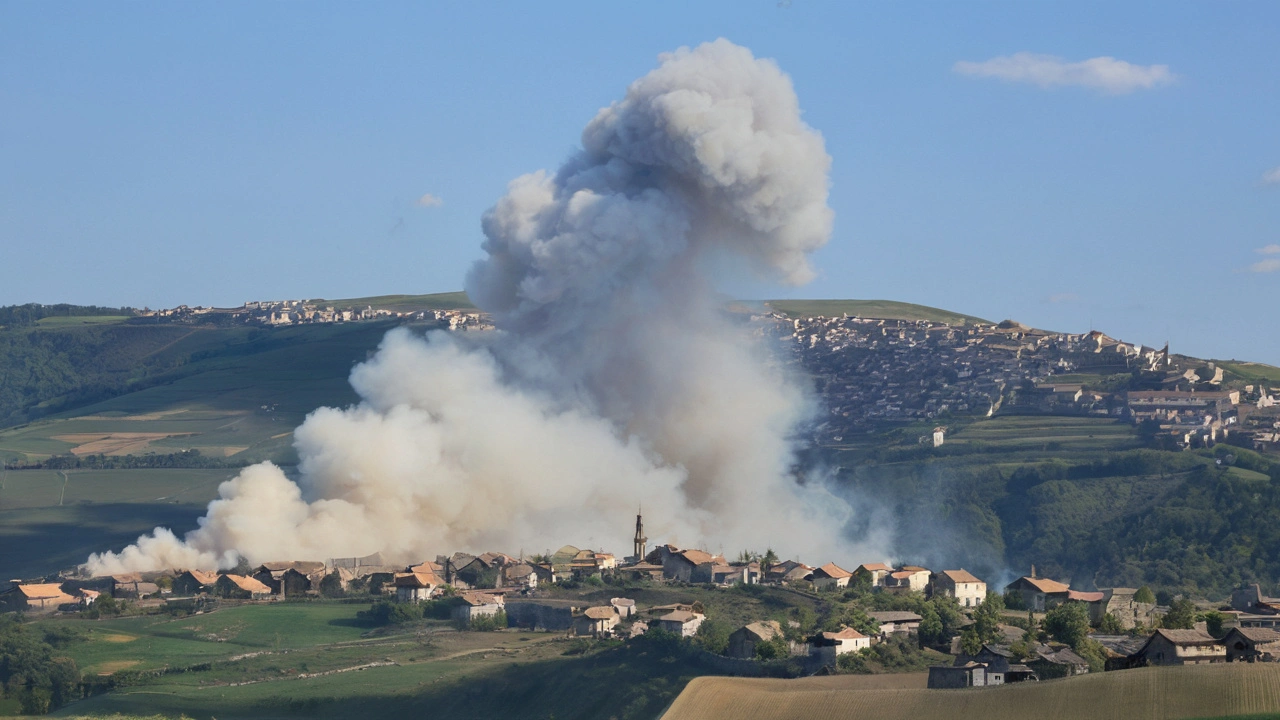
One of the most glaring areas where Israel is accused of crossing these red lines involves its actions in Gaza. The Israeli military's operations in the region have often resulted in the destruction of infrastructure and the killing of civilians—actions that have led to severe humanitarian crises. The blockade imposed by Israel has also brought the region to the brink of economic and social collapse, affecting essential services like healthcare, education, and clean water supply. The international community has frequently condemned these actions, yet effective measures to hold Israel accountable remain conspicuously absent.

Human Rights Violations

The charge of hypocrisy against Israel is rooted in the country's insistence on the observance of international law while allegedly flouting it in its own policies. Reports from international organizations frequently highlight the systemic violations of human rights by Israeli forces, including unlawful killings, arbitrary detentions, and collective punishment. These actions not only undermine the moral high ground that Israel often claims but also contribute to the deep-seated resentment and hostility that perpetuate the cycle of violence in the region.

The Role of the International Community

Another critical focus of the Al Jazeera article is the role—or lack thereof—played by the international community. The author argues that there is a palpable double standard in how global powers respond to Israel compared to other nations. While sanctions and condemnations are swiftly directed at countries in cases of human rights violations or breaches of international law, the same standards often seem to be relaxed or ignored in Israel's case. This inconsistency not only erodes the credibility of international institutions but also raises questions about the realpolitik considerations that seem to override the principles of justice and human rights.

Need for Accountability

The perceived impunity enjoyed by the Israeli government has far-reaching implications. It sends a message that powerful nations can flout international norms without facing serious consequences. The call for accountability is not just a moral imperative but a necessary step to restore faith in the international system. Legal experts argue that Israel's actions are not only morally indefensible but also legally indefensible, citing numerous international laws and UN resolutions that the country has allegedly violated. Despite this, tangible actions such as sanctions or international legal proceedings remain elusive.

The Way Forward

The author of the Al Jazeera article stresses that the current state of affairs cannot continue indefinitely. There is an urgent need for the international community to move beyond mere rhetoric and take decisive actions to enforce international law and protect Palestinian rights. This could involve a range of measures, from diplomatic pressure and economic sanctions to international legal action. The aim should be not only to hold Israel accountable for its actions but also to create a conducive environment for a lasting and just peace in the region.

Conclusion

The debate over red lines and Israel's actions in the Israeli-Palestinian conflict underscores a broader issue of consistency and fairness in the application of international law. The ongoing suffering of Palestinians in Gaza and the West Bank serves as a stark reminder of the human cost of these geopolitical games. As the international community grapples with these challenges, the hope is that justice and human rights will eventually prevail over politics and power.
Author: Themba Sweet
Themba Sweet
I am a news journalist with a passion for writing about daily news in Africa. With over 20 years of experience in the field, I strive to deliver accurate and insightful stories. My work aims to inform and educate the public on the continent’s current affairs and developments.

20 Comments

  • Mark L said:
    July 31, 2024 AT 20:56
    this is so true 😔 i mean, how many times have we seen this exact script play out? đŸ€Šâ€â™‚ïž
  • Orlaith Ryan said:
    August 1, 2024 AT 14:23
    Finally someone says it!
  • Arvind Pal said:
    August 3, 2024 AT 00:13
    gaza is a living hell and the world just watches
  • Stuart Sandman said:
    August 3, 2024 AT 00:27
    lol you think this is about law? it's about who owns the media and who controls the banks. the us and uk fund this whole circus. they don't care about justice, they care about control. the red lines are drawn in blood and gold, not in the un charter.
  • John Bartow said:
    August 4, 2024 AT 16:53
    Look, I get that the narrative is emotionally charged, and I’m not defending every action taken by the Israeli government - but let’s not pretend this is a simple morality play. The region has been a powder keg for over a century, and the idea that one side is purely victim and the other purely oppressor ignores the messy, brutal history of nationalism, colonialism, and existential fear on both sides. Israel was founded in the aftermath of the Holocaust, and for many Israelis, existential threats aren’t theoretical - they’re inherited trauma. The blockade? It’s not just cruelty; it’s a security calculus born from decades of rocket fire, suicide bombings, and tunnels designed to kill civilians. That doesn’t excuse disproportionate force, but it does contextualize it. Meanwhile, the international community’s selective outrage is undeniable. When Russia annexes Crimea, we sanction. When Iran funds Hezbollah, we condemn. But when Israel responds to attacks from groups that openly call for its annihilation, suddenly it’s apartheid, colonialism, genocide? The double standard isn’t just visible - it’s institutionalized. And it’s not just western governments; it’s NGOs, universities, even celebrities who’ve turned human rights into performative activism. The real tragedy? It’s not just the lives lost in Gaza - it’s how this conflict has poisoned global discourse. People who once cared about justice now just pick sides and shout slogans. We’ve lost the ability to hold complexity. We need accountability, yes - but also nuance. We need to stop reducing 75 years of history into memes and hashtags. And we need to stop pretending that the solution lies in more sanctions or more condemnations when the real answer requires a political will that no one in power seems willing to muster.
  • DJ Paterson said:
    August 6, 2024 AT 03:32
    I think John’s point about trauma and context is vital. But I also think we’re missing the forest for the trees. The legal framework isn’t broken because of bias - it’s broken because it was never designed to hold powerful states accountable when their allies are the ones enforcing it. The ICC can’t touch Israel because the US blocks it. The UN can’t act because of veto power. So the real issue isn’t hypocrisy - it’s structure. We’re asking a system rigged for power to police itself. That’s like asking the fox to guard the henhouse and then being shocked when the hens disappear.
  • Nikhil nilkhan said:
    August 7, 2024 AT 22:51
    I’ve been to both sides of the wall. I’ve met families in Ramallah who haven’t seen their relatives in 20 years. I’ve spoken to Israeli parents who sleep with gas masks under their beds. Neither side is innocent. But the imbalance of power is real. And power without accountability becomes tyranny. We need justice, not just peace.
  • Jacquelyn Barbero said:
    August 9, 2024 AT 09:11
    this hits so hard đŸ„ș i work with refugees and i see the trauma every day. we need to stop talking and start doing something real. like, actually helping people. not just posting infographics.
  • J Mavrikos said:
    August 9, 2024 AT 15:50
    I’m from Canada and I’ve watched this unfold from afar. The thing that gets me is how quickly people forget that Israel is the only democracy in the region. Sure, it’s flawed - but so are we all. The real enemy here isn’t Israel - it’s the extremists on both sides who want this war to last forever. They feed on division. We need to support the moderates - the Israeli peace activists and the Palestinian civil society leaders - not drown them in rhetoric.
  • Damini Nichinnamettlu said:
    August 11, 2024 AT 01:53
    india supports palestine because we know what colonization does. we were under british rule for 200 years. we know what it feels like to have your land taken, your culture erased, your people killed. israel is not a victim here. it is the colonizer. period.
  • Vinod Pillai said:
    August 11, 2024 AT 17:58
    this is all just jews controlling the world. they own the banks, the media, the governments. they created this conflict to distract us from their real power. you think this is about gaza? no. it’s about control. they want you to be angry at each other so you don’t look up and see who’s really pulling the strings.
  • Avantika Dandapani said:
    August 12, 2024 AT 17:07
    i’ve cried reading this. my cousin in jenin lost her home last year. she’s 12. she draws pictures of her old house. she says she misses the smell of jasmine. we can’t let her story disappear. we have to speak up.
  • Mark Archuleta said:
    August 14, 2024 AT 15:48
    The structural asymmetry here is undeniable - asymmetry in military capability, asymmetry in diplomatic leverage, asymmetry in media narrative framing. The legal architecture of international law was designed for state-to-state relations, but asymmetric conflicts like this one expose its epistemic blind spots. The Geneva Conventions don’t account for non-state actors embedded within civilian populations, nor do they provide mechanisms for enforcement when the P5 have vested interests. This isn’t moral failure - it’s institutional failure. We need a new paradigm: transnational accountability courts with subpoena power, independent fact-finding commissions funded by civil society, and a reimagined UN Security Council structure that doesn’t grant veto power to permanent members with active conflicts of interest. The current system is a house of cards built on geopolitical convenience.
  • Ayushi Dongre said:
    August 15, 2024 AT 21:43
    The invocation of international law, while normatively compelling, remains a rhetorical instrument in the absence of enforceable mechanisms. The international legal order, as presently constituted, operates as a hierarchy rather than a system of universal application. The selective invocation of norms - where certain states are held to account while others are granted impunity - not only undermines the legitimacy of the system but also reinforces the very power asymmetries it purports to mitigate. A genuine commitment to justice would necessitate the institutionalization of universal jurisdiction, the cessation of arms transfers to belligerents in violation of international humanitarian law, and the establishment of an independent tribunal with prosecutorial autonomy, free from the influence of permanent members of the Security Council. Until such structural reforms are enacted, the discourse on red lines remains performative, and the suffering of civilians, perpetual.
  • Pete Thompson said:
    August 16, 2024 AT 21:03
    you guys are all brainwashed. israel is the most moral country in the middle east. they have the best healthcare, the most advanced tech, the freest press. palestinians are just lazy, overpopulated, and taught to hate. if they wanted peace they’d stop throwing rocks and start building schools. stop blaming israel for their own failure.
  • Richard Berry said:
    August 16, 2024 AT 23:14
    i just wanna know if anyone’s actually tried talking to people on both sides? like, real conversations? not tweets. not protests. actual human to human? i bet most of us are just repeating what we heard on youtube.
  • rakesh meena said:
    August 18, 2024 AT 14:52
    no more talk we need action now
  • toby tinsley said:
    August 20, 2024 AT 10:35
    I appreciate the passion here, but I wonder if we’re conflating moral outrage with moral clarity. The suffering in Gaza is undeniable. The hypocrisy of global powers is undeniable. But the path forward isn’t more condemnation - it’s more listening. To the Palestinian mother who fears her child will be next. To the Israeli grandmother who remembers her parents fleeing pogroms. To the Egyptian teacher who sees her students radicalized by videos of bombed schools. Maybe the real red line isn’t in the UN charter - it’s in our willingness to see the other as human. Not as enemy. Not as victim. Just as human.
  • Sandy Everett said:
    August 21, 2024 AT 13:00
    I’ve worked with aid groups in Gaza for 12 years. The children there have never known peace. They don’t know what it’s like to have clean water every day, or to go to school without fear. We keep saying ‘the world must act’ - but the world has been silent for decades. If we’re serious about justice, we stop funding weapons and start funding hospitals. Not tomorrow. Today.
  • Chris Richardson said:
    August 22, 2024 AT 02:53
    i just want to say thank you for writing this. it’s not easy to talk about this stuff without getting yelled at. but we have to. even when it’s messy. even when it’s hard. we owe it to the kids in gaza and the kids in tel aviv to try.

Write a comment