
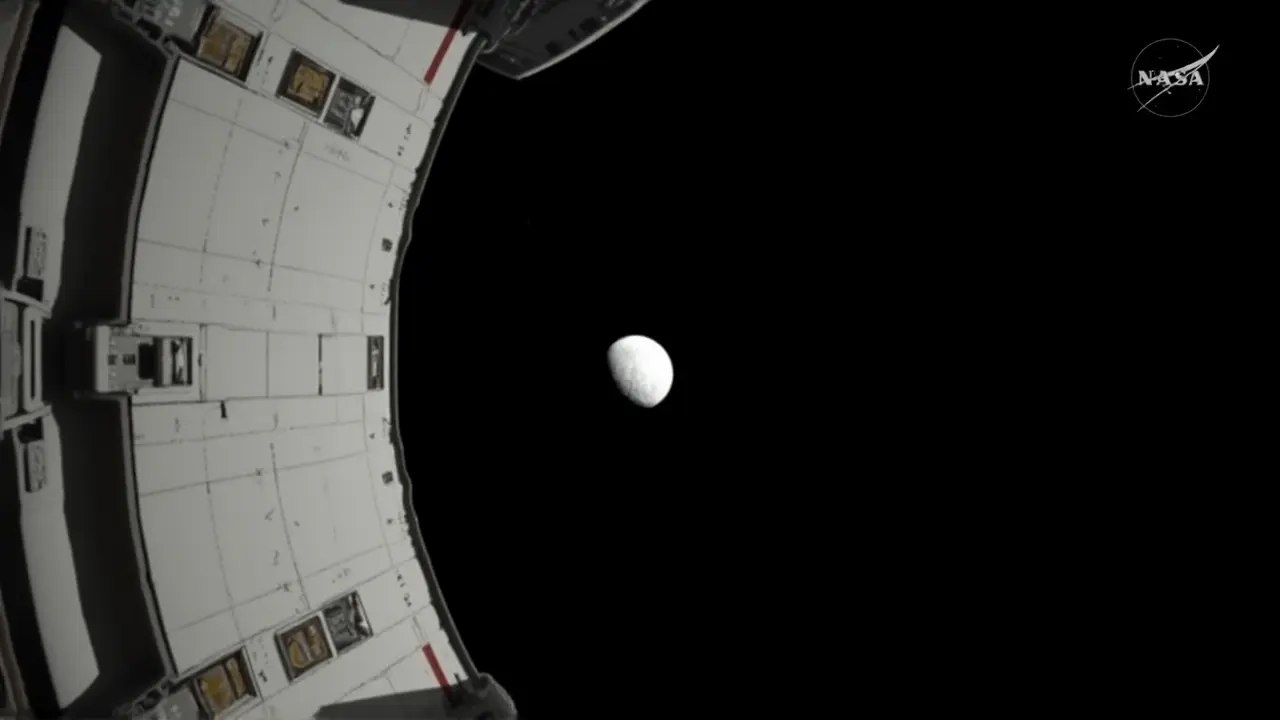
Four astronauts have just rewritten the record books. On April 1, 2026, at 6:35 p.m. EDT, NASA successfully launched the Artemis II mission from Kennedy Space Center in Florida, sending a diverse crew on a daring 10-day journey around the Moon. This wasn't just a ride; it's the first time humans have ventured back toward the lunar surface since 1972, marking a massive leap in our quest to establish a permanent presence in deep space.
Here's the thing: this mission wasn't about landing—at least, not yet. The goal was to put the Orion spacecraft through its paces with a real crew on board to see if our life support systems can actually handle the rigors of the void. It's one thing to send a mannequin or a robot; it's quite another to have four humans relying on a machine to breathe and survive while hurtling 250,000 miles away from home.
Breaking the Apollo 13 Distance Barrier
The real drama unfolded on April 6, 2026. During a high-stakes flight phase, the crew did something no human had ever done. At 1:56 p.m. EDT, the Orion spacecraft officially surpassed the legendary distance record set by Apollo 13, flying beyond 248,655 miles from Earth. Turns out, the crew was acutely aware of the moment, commenting on the achievement at 2:10 p.m. EDT as they drifted further into the black than any previous explorers.
The highlight of the trip was a grueling seven-hour lunar flyby observation period. Starting at 2:45 p.m. EDT, the astronauts darkened the cabin lights—creating a makeshift darkroom in space—to capture high-resolution imagery of both the near and far sides of the Moon. They weren't just sightseeing; the team had 35 specific targets tied to 10 distinct science objectives, including potential sightings of the Apollo 12 and Apollo 14 landing sites. It's a bit like a cosmic scavenger hunt, but with the fate of future lunar colonies on the line.
The Faces of the New Space Age
The mission was led by a powerhouse crew that represents a global effort. Reid Wiseman, Victor Glover, and Christina Koch all flew under the NASA banner. Joining them was Jeremy Hansen, a Mission Specialist from the Canadian Space Agency (CSA), proving that the return to the Moon is a multilateral venture.
The logistics leading up to the launch were tight. The crew arrived in Florida on March 27, and by March 31, Mark Burger, the launch weather officer from the 45th Weather Squadron, was giving the green light. Interestingly, the mission's success depended heavily on the Space Launch System (SLS) rocket, which began propellant loading at 7:45 a.m. on launch day. Everything had to be perfect; one glitch in the tanking process could have pushed the launch back by days.
A Global Spectacle and Technical Triumph
NASA didn't just keep this in a control room. They turned the flyby into a global event, streaming the experience across every major platform—from Netflix and Hulu to Amazon Prime and YouTube. For those who wanted a more tactile experience, a massive watch party was held at Space Center Houston, where fans got to hear from Johnson Space Center leaders while watching the SLS roar into the sky.
But beyond the hype, the technical wins are what matter. The deployment of Orion's four solar array wings immediately after launch ensured the crew had constant power. The transition from launch operations to flight operations was seamless, allowing ground engineers to verify that the spacecraft's internal environment remained stable. If you're wondering why this matters, it's because this flight is the "stress test" for the upcoming Artemis III mission, which intends to actually land humans on the lunar south pole.
The Road Back to the Lunar Surface
This mission closes a gap of over five decades. Since the last Apollo mission in 1972, humans have been confined to Low Earth Orbit (LEO). By pushing Orion past the Apollo 13 mark, Jared Isaacman, the NASA Administrator, and his team have proven that we have the hardware to go deep. The ripple effect here is huge: we now know the life support works, the radiation shielding is holding, and the communication arrays can handle the distance.
The next steps are clear. With the data gathered from the 35 science targets and the success of the lunar flyby, NASA will refine the trajectory and safety protocols for the actual landing. We aren't just visiting the Moon anymore; we're scouting the terrain for a permanent base. The transition from "exploration" to "habitation" has officially begun.
Frequently Asked Questions
How far did the Artemis II crew actually travel?
The crew officially broke the Apollo 13 record on April 6, 2026, by traveling beyond 248,655 miles from Earth. This distance was surpassed at 1:56 p.m. EDT, making them the farthest humans to ever travel from our home planet in history.
Who were the astronauts on the mission?
The mission featured a four-person crew: NASA astronauts Reid Wiseman, Victor Glover, and Christina Koch, along with Jeremy Hansen from the Canadian Space Agency (CSA), who served as the Mission Specialist.
What was the primary purpose of the lunar flyby?
The flyby served two main purposes: testing the Orion spacecraft's life support systems with humans on board and conducting science observations. The crew targeted 35 specific locations, including old Apollo landing sites, to verify capabilities for future lunar landings.
How long did the total mission last?
The Artemis II mission was designed as a 10-day test flight. After launching on April 1, 2026, the crew spent about a week traveling and orbiting the Moon before beginning their return journey to Earth.
Where did the launch take place?
The mission launched from Launch Pad 39B at the Kennedy Space Center in Florida. This historic site was used for the departure of the Space Launch System (SLS) rocket on April 1, 2026, at 6:35 p.m. EDT.
Absolutely legendary achievement! 🚀 The engineering behind the SLS is just mind-blowing 🌟
total waste of tax payer money lol we still hav holes in our roads and nasa is playing scavenger hunt in space
the life support systems validation is the real win here since we cant just send a repair crew to the lunar south pole if things go sideways
This is a total win for the team! The synergy between the CSA and NASA is just peak collaboration :) Love seeing the diversity on the crew manifesting in such a high-stakes environment! 🌠
It's fascinating but honestly just a drop in the bucket. We're breaking records of distance while our own spirit of exploration on Earth is dying. Why do we care about 248,000 miles of void when we can't even understand our own neighbors? It feels like a desperate attempt to distract us from the collapse of the social contract. Maybe the void is where we're actually meant to be because we've failed here. Just my thoughts... :-)
Everyone should just be proud that we're finally going back! It's so exciting to see the world coming together for this :) <3
lol imagine thinkin a 'test flight' is actual progress. we did this in the 60s and then just stopped. now we're doing it again with fancy netflix streams. total joke
From a technical perspective, the integration of the Orion spacecraft's solar array deployment is particularly noteworthy because the transition from the launch phase to the flight phase requires absolute precision in power management, and given that they are targeting the lunar south pole for Artemis III, the data on radiation shielding and life support stability gathered during this 10-day window will be instrumental in refining the trajectory and mitigating the risks associated with long-term lunar habitation, which is far more complex than a simple flyby mission since the thermal gradients at the poles are extreme and could potentially jeopardize the structural integrity of the landing modules if not properly accounted for in the current design phase.
The ontological implications of surpassing the Apollo 13 apogee are profound. We are essentially recalibrating the human spatial paradigm, shifting from an era of transient visitation to one of systemic habitation via the deployment of the SLS architecture.
who cares bout distance records when we waste fuel like this its immoral to spend billions on a photo op while peple starve in the streets
im just glad they got the fuelin right. that part always looks so stressfull in the videos
Lets goooo! 🚀 This is the energy we need! The Moon is just the beginning, Mars is next! 🌕🔥
Pretty chill to think about them just floating out there in the dark... :-)
The sheer audacity of flying past the Apollo 13 mark is just wild! I can't even imagine the silence of that void!
It is frankly elementary that the SLS is the only viable heavy-lift vehicle for such an endeavor. While others attempt to mimic this capability, the precision of NASA's trajectory remains unmatched globally.
Absolute beast of a rocket! Finally moving past the LEO phase and actually doing something bold!
Cool to see the Canadians getting a piece of the action. Space is better when it's a group project.
The achievement is quite commendable. It is a testament to the discipline of the crew
Quietly cheering for everyone involved from here in India.
Just watching the stream and vibing with the whole thing. Great job to the team.