
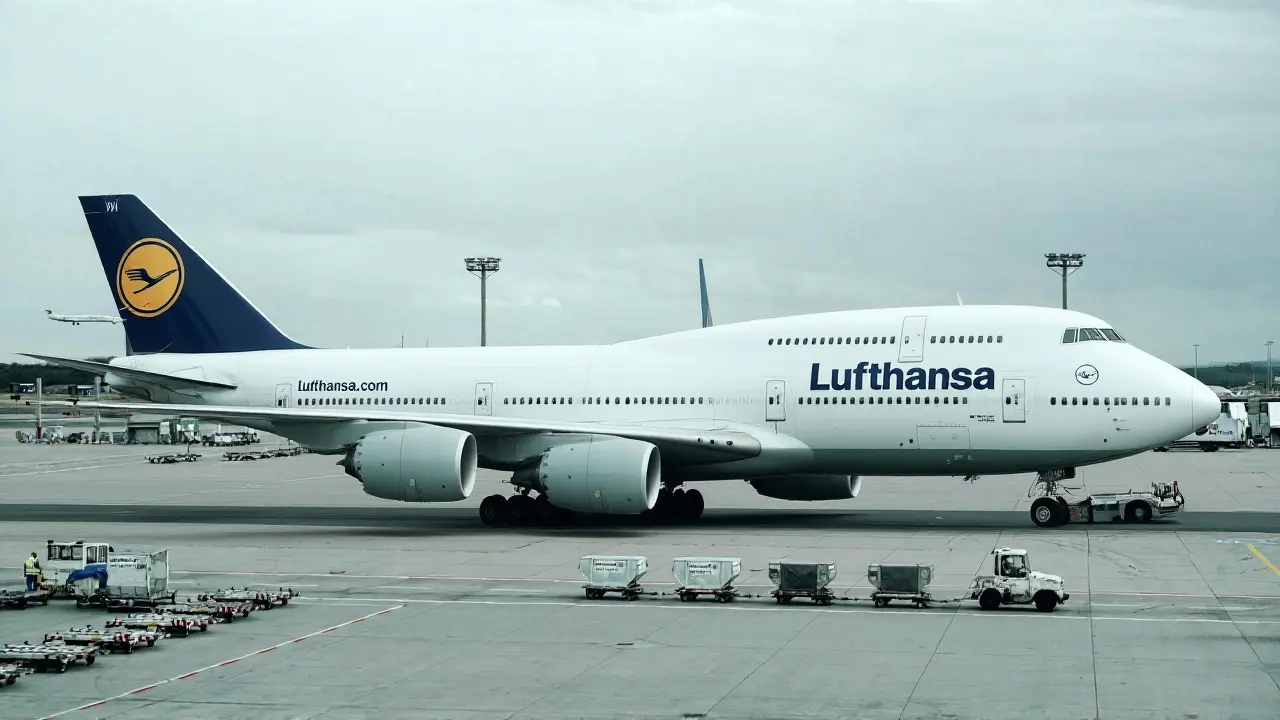
Travel plans for thousands of passengers were thrown into chaos after the Vereinigung Cockpit (VC) pilots' union launched a sudden strike against Lufthansa and its subsidiaries. The walkout hit Lufthansa and Lufthansa CityLine on Monday, April 13, and Tuesday, April 14, 2026, while Eurowings Germany was impacted on Monday only. The move leaves travelers scrambling as the group struggles to maintain a skeleton crew across its network.
Here's the thing: the timing couldn't be worse. This isn't just a standalone incident; it's the third time in a single month that Lufthansa passengers have dealt with labor unrest. Just three days earlier, on April 10, 2026, the UFO union led a cabin crew strike. It's a nightmare scenario for anyone trying to fly through Germany right now—two separate disruptions in less than a week.
The trigger for this latest chaos was an announcement made on April 12, 2026, at 11:09 CET. Lufthansa described the notice as "disproportionate and very short-notice," but the pilots aren't budging. The core of the fight? It's the usual suspects—pay and working conditions—but with a nasty twist: a long-running, bitter disagreement over pilot pension schemes that just won't go away.
A Network in Crisis: Flight Capacity and Operations
Trying to keep the planes in the air proved to be an uphill battle. Lufthansa's special flight schedule revealed some sobering numbers. Short-haul flights were operating at a mere 33 percent of their normal capacity on both strike days. Long-haul routes fared slightly better, maintaining 50 percent of their regular schedule. Meanwhile, Eurowings managed to keep 60 percent of its flights running on Monday.
Interestingly, not every part of the group was grounded. The strike was surgical. While Eurowings Germany was hit, its sister company, Eurowings Europe, kept flying as if nothing were happening. Other group members—including SWISS, Austrian Airlines, and Brussels Airlines—remained unaffected. Lufthansa attempted to pivot, routing passengers through these non-striking carriers and partner airlines to plug the gaps in the schedule.
For those stuck on German domestic routes, there was a silver lining. Travelers could exchange their flight tickets for a Deutsche Bahn train ticket free of charge. It's a practical workaround, though the airline warned that "City Night Line" trains were excluded from the deal.
Know Your Rights: The Battle for EC 261 Compensation
Now, here is the part that actually matters for your wallet. Many airlines try to claim that strikes are "extraordinary circumstances" to avoid paying out. But the law is clear on this one. Under EU Regulation EC 261, a pilot strike is considered the airline's responsibility, not an act of God. This means affected passengers are eligible for cash compensation.
The payout depends on how far you were flying:
- €250 for flights up to 1,500 kilometers.
- €400 for flights between 1,500 and 3,500 kilometers.
- €600 for flights exceeding 3,500 kilometers.
To qualify, your flight must have been canceled with less than 14 days' notice or arrived at the destination three or more hours late. Turns out, with a strike announced only 24 hours before it started, almost everyone affected meets the criteria. Passengers have up to three years to file these claims, though doing it now usually means getting paid faster.
The Ripple Effect and Future Outlook
This labor volatility suggests a deeper systemic issue within the Lufthansa Group. The constant oscillation between cabin crew and pilot disputes indicates a workforce that feels undervalued and a management team struggling to find a middle ground. This isn't just about a few missed vacations; it's about the stability of one of Europe's largest aviation hubs.
What's next? The industry is watching to see if the VC union will call for further action or if the pressure of thousands of stranded passengers will force Lufthansa back to the bargaining table with a better offer on pensions. For now, the advice to travelers is simple: keep your contact details updated in your booking and check your flight status before leaving for the airport.
Historical Context: A Pattern of Unrest
This particular clash over pensions isn't new. It's been a simmering point of contention for years. The aviation industry has seen a shift in leverage since the pandemic, with pilot shortages globally giving unions more bargaining power. When you combine that with the inflation spikes seen across Europe, the demand for better pay and secure retirements becomes an ultimatum rather than a request.
The use of "short-notice" strikes has become a tactical weapon for the VC union, designed to maximize operational pressure on the airline while minimizing the time passengers have to make alternative arrangements. It's a high-stakes game of chicken that leaves the consumer caught in the middle.
Frequently Asked Questions
Why is this strike different from an air traffic control strike?
The distinction is critical for compensation. Air traffic control strikes involve external government employees, which airlines often classify as "extraordinary circumstances." However, pilot strikes involve the airline's own staff, making the company legally responsible for the disruption and required to pay EC 261 compensation.
What are my options if my flight was canceled?
Passengers have two primary choices: a full refund of the ticket price or a one-time free rebooking onto the next available flight. For those traveling within Germany, Lufthansa also offers a free exchange for a Deutsche Bahn train ticket, provided it's not a City Night Line service.
How much compensation can I actually claim?
Depending on the distance of your flight, you can claim between €250 and €600. Short flights (under 1,500km) get €250, medium flights (up to 3,500km) get €400, and long-haul flights (over 3,500km) are entitled to €600 per person.
Which airlines were NOT affected by the VC strike?
Several Lufthansa Group carriers remained operational, including SWISS, Austrian Airlines, Brussels Airlines, Discover Airlines, Air Dolomiti, and Edelweiss. Notably, Eurowings Europe also continued normal operations, as the strike only targeted Eurowings Germany.
How long do I have to file a claim for the strike disruption?
Generally, passengers have up to three years from the date of the flight to submit a claim under EU Regulation EC 261. While the window is long, filing promptly is recommended to ensure the airline's records are fresh and the payment process is faster.
The EC 261 rules are absolute lifesavers for travelers ✈️ Just make sure you keep all your original booking confirmations and boarding passes because the airlines will try to make you jump through hoops to prove you were actually on that flight 📝💰
most people dont realize that the airline's app usually lets you request the refund faster than the website if you navigate to the flight status section first
Omg please stop acting like the pilots are victims here lol they make bank and just want more money for some fancy pension plan while regular people lose their vacations. Its totaly ridiculous
The systemic fragility of the hub-and-spoke model is laid bare here. When labor disputes catalyze operational paralysis, the resulting entropy isn't just a logistics failure but a manifestation of the precarious equilibrium between corporate fiscal austerity and the sociological needs of a specialized workforce. This is basically a textbook example of negative externalities where the consumer bears the burden of an institutional impasse regarding deferred compensation structures
lmfao imagine thinkin lufthansa cares about your wallet. they'll fight every single cent of that 600 euro payout until you hire a lawyer just to get your money back. total joke
Oh sure, because nothing says "world class airline" like grounding half your fleet three times in a single month. Truly an inspiration to us all in how to manage a business 🙄
Wonderful timing as always.
disgusting that these pilots just walk out and leave families stranded it's immoral. i bet they dont even care who they hurt as long as they get their extra bonus. some people have no shame at all in 2026
Why is it that we always blame the workers for the failures of the C-suite executives? 😠 The corporate greed that led to these pension disputes is the real crime here! It's absolutely mental that we're expected to just accept this as "business as usual" while the higher-ups keep their bonuses regardless of the chaos! 🙄
I hope they find a way to compromise soon so everyone can just get back to their families and trips :) ❤️
i just hope no one got stuck in the airport for too long. sounds like a totaly mess
Dealing with German rail as a backup is a bold move. DB has its own set of legendary delays that make a flight cancellation look like a minor inconvenience. Good luck to anyone taking that train
For those filing claims, I recommend using a dedicated flight compensation service if you find the airline's portal too complex. They usually take a percentage of the payout but handle all the legal paperwork and follow-ups, which can be quite tedious when dealing with large carriers like Lufthansa.
Omg I literally can't even believe this is happening! I had a trip planned for next year and now I'm terrified to book anything! This is honestly the most dramatic thing to happen in aviation this month! Like, how can they be so disorganized? I've seen better management in a lemonade stand! Absolute disaster!
It is truly unfortunate that so many individuals have had their journeys disrupted. I trust that the parties involved will eventually reach a resolution that respects the dignity of the employees while ensuring the stability of the network for the traveling public
I feel for everyone caught in this operational bottleneck! 🌸 Just a heads up for those navigating the rebooking process: try to utilize the concierge services if you have high-tier status, as they can often find creative routing through partner carriers to bypass the strike-affected hubs ✈️✨